Natural Resources and Conservation — Short Answer
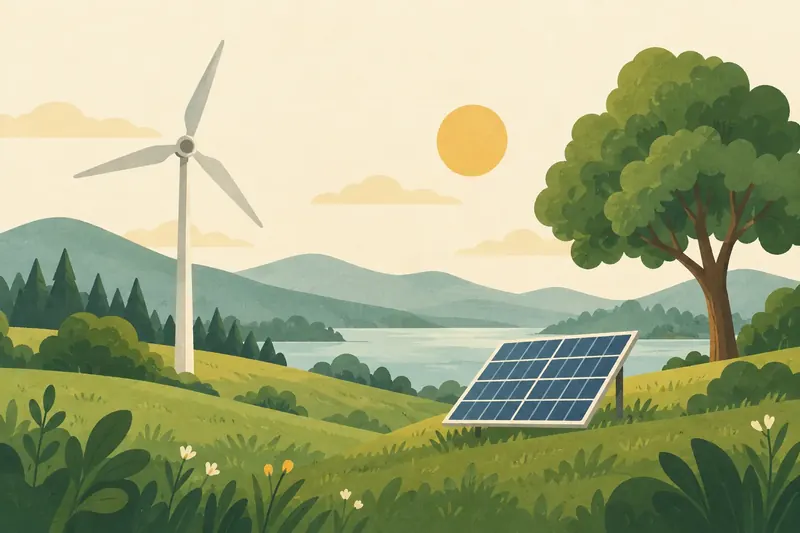
About this worksheet
This short answer printable supports 6-8 learners working on Natural Resources and Conservation. Open-response prompts that ask students to explain a process, justify a choice, or compare two ideas. Encourages writing in the science classroom. Use it as guided practice during your unit, as a take-home review, or as a quick formative check before moving on to the next concept. The activity is aligned to NGSS performance expectation MS-ESS3-1 and pairs cleanly with hands-on demonstrations, picture books, and short videos already in your classroom rotation. An answer key with teacher notes appears at the bottom of this page so you can grade in seconds and identify common misconceptions before they harden.
Learning objectives
- Define renewable and nonrenewable resources.
- Give examples of each.
- Explain how mining or drilling changes a landscape.
- Propose a conservation choice and predict its impact.
Vocabulary
- renewable
- A resource that can be replaced quickly.
- nonrenewable
- A resource that cannot be replaced quickly.
- conservation
- Using resources carefully.
- fossil fuel
- A fuel made from ancient plants and animals.
- recycle
- To use something again instead of throwing it away.
Practice exercises (10 questions)
Print this section for students. Reveal the answer key below for grading.
- In your own words, renewable resources can be replaced within a human lifetime; nonrenewable resources cannot.
- State the learning objective for Natural Resources and Conservation in your own words.
- Give one real-world example that shows conservation choices today affect resources tomorrow.
- Why is it important for a scientist to know that renewable resources can be replaced within a human lifetime; nonrenewable resources cannot?
- How would you explain to a younger student that mining, drilling, and farming change landscapes?
- Draw a quick sketch that shows conservation choices today affect resources tomorrow. Label two parts.
- Compare renewable resources can be replaced within a human lifetime; nonrenewable resources cannot with one other idea you have learned in this unit.
- Which everyday observation would best support the idea that mining, drilling, and farming change landscapes?
- Predict what would happen if conservation choices today affect resources tomorrow were not true.
- Write one new question you still have about renewable resources can be replaced within a human lifetime; nonrenewable resources cannot.
🔑 Reveal the teacher answer key ▶ tap to toggle
- Renewable resources can be replaced within a human lifetime; nonrenewable resources cannot.
- Define renewable and nonrenewable resources.
- Example: Conservation choices today affect resources tomorrow.
- Because Renewable resources can be replaced within a human lifetime; nonrenewable resources cannot.
- You could say: Mining, drilling, and farming change landscapes.
- A correct sketch shows Conservation choices today affect resources tomorrow. and labels two clear parts.
- A complete answer notes that Renewable resources can be replaced within a human lifetime; nonrenewable resources cannot., then names a second idea and one similarity or difference.
- Any observation that points back to: Mining, drilling, and farming change landscapes.
- A reasonable prediction explains a consequence of removing the fact that Conservation choices today affect resources tomorrow.
- Accept any thoughtful question about Renewable resources can be replaced within a human lifetime; nonrenewable resources cannot.; look for evidence the student is connecting to today's big idea.
Teacher notes
Watch for these common misconceptions: Renewable resources can be replaced within a human lifetime; nonrenewable resources cannot. Many students will guess based on appearance instead of evidence — encourage them to point to a specific clue from the passage or diagram. For early finishers, ask them to draw their own example or write a one-sentence summary on the back of the page.
How to use in class
Print one copy per student, or project the page on your board for a whole-class discussion. The short answer format works well as a 10-15 minute activity within a 45-minute science block. Younger students may need the directions read aloud the first time you use this format; once they have done one or two, they can usually start independently. For early finishers, ask them to flip the page over and either draw an example from real life or write one new question they still wonder about. Both options stretch their thinking without requiring extra prep from you.
If you are teaching this unit in a multi-grade classroom or a homeschool setting with siblings of different ages, scaffold by reading the first two questions aloud with the whole group, then release younger students to work in pairs while older students complete the printable independently. The reveal-on-click answer key keeps the page free of distractions while students are working.
Related Natural Resources and Conservation printables
Match key terms to their definitions → 02 Fill in the Blank
Complete sentences using a word bank → 03 Diagram Labeling
Label the parts of a science diagram → 04 Reading Passage
Read a short nonfiction passage and answer comprehension questions → 05 Sort and Classify
Sort cards or items into the correct category → 06 Investigation Lab
Plan and record a simple hands-on investigation → 07 Quick Quiz
Demonstrate understanding with a 10-question quiz →