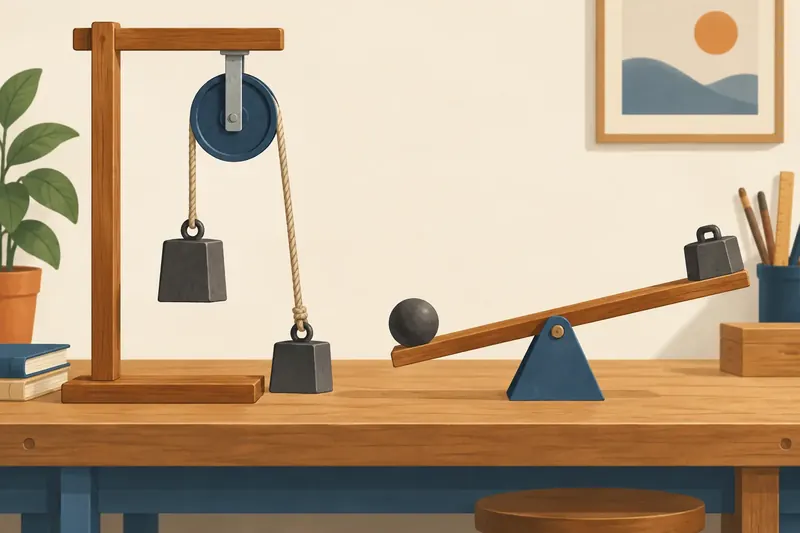
Simple Machines
Learning objective
Students identify the six simple machines and describe how each one makes work easier.
Specific learning objectives
- Name the six simple machines.
- Identify each in everyday objects.
- Explain how a simple machine changes a force.
- Describe a compound machine.
Big ideas in this unit
- Levers, pulleys, wheels and axles, inclined planes, wedges, and screws are simple machines.
- Simple machines change the size or direction of a force.
- Compound machines combine simple machines.
Below you will find eight printable worksheets on Simple Machines. Each printable opens on its own page with directions, ten student questions, and a one-click reveal teacher answer key.
All Simple Machines printables
8 formatsMatch key terms to their definitions → 02 Fill in the Blank
Complete sentences using a word bank → 03 Short Answer
Explain concepts in one to three sentences → 04 Diagram Labeling
Label the parts of a science diagram → 05 Reading Passage
Read a short nonfiction passage and answer comprehension questions → 06 Sort and Classify
Sort cards or items into the correct category → 07 Investigation Lab
Plan and record a simple hands-on investigation → 08 Quick Quiz
Demonstrate understanding with a 10-question quiz →
How to teach Simple Machines
Most teachers introduce Simple Machines with a short demonstration or a picture-book read-aloud, then move into vocabulary work so students share a common language for the rest of the unit. The Vocabulary Match and Diagram Labeling printables on this page are designed for that opening day. From there, the Reading Passage and Short Answer printables give students a chance to think with their pencils — drawing, writing, and explaining what they noticed.
By the middle of the unit, students are ready for the Investigation Lab sheet. It scaffolds a hands-on activity using simple classroom materials and includes a structured place to record observations. Wrap the unit with the Quick Quiz, which mirrors the language and diagrams students have already practiced, so the assessment feels familiar rather than punishing.
Each printable is independent — pick what works for your class today rather than feeling boxed into a sequence.